
Why Choose the Original Ubiquinone Q10?

-
Unique CoQ10 formula demonstrating high bioavailability
- Over 30 years of consumer experience with safety and efficacy
- Documented in more than 100 scientific studies
- Official reference product for the International Coenzyme Q10 Association (ICQA)
- Manufactured under Danish pharmaceutical control
- The product
- Q10 Quality
- What is Q10
- Q-Symbio
- FAQ
- Reviews
| 1 capsule contains | %NRV* | ||
|---|---|---|---|
| Coenzyme Q10 as ubiquinone | 100 mg | ** | |
| Dissolved in soybean oil. | |||
| Riboflavin (vitamin B2) | 1,4 mg | 100% | |
| In soft gelatin capsules. |
*Nutrient Reference Value.
** NRV not established.
Product Facts
Directions
1-3 capsules per day or as directed by a health professional.
Do not exceed the recommended daily dosage.
To be taken preferably with or after a meal.
Not suitable for vegetarians.
Pregnant and lactating women and those on medication should seek professional advice prior to taking supplements.
Nutritional supplements should not be used as a substitute for a varied diet and a healthy lifestyle.
Patented manufacturing method, EP 3 190 898 B1.
Ingredients
Bulking agent: Soybean oil*
Capsule shell: Bovine Gelatine
Humectants: Glycerol, purified water
Co-enzyme Q10
Antioxidant: D-alpha-tocopherol
Colour: Iron oxide, Riboflavin
Vitamin: B2 (Riboflavin)
Storage
Room temperature out of direct sunlight. Keep out of reach of children.
*Does not contain phytoestrogens (estrogenic substances)
What is Bio-Quinone Q10 Gold?
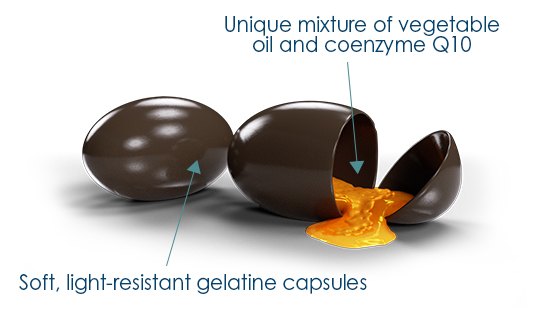
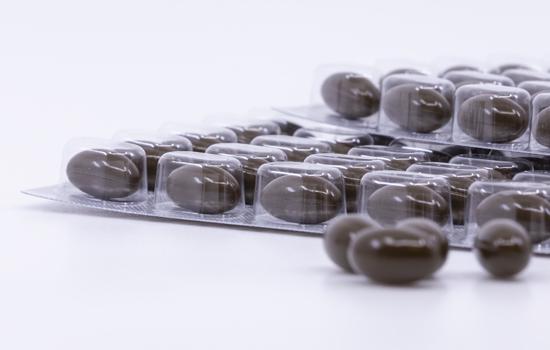 Bio-Quinone Active Q10 GOLD consists of soft gelatin capsules with 100 mg of Q10 in the form of active ubiquinone dissolved in oil. For several decades, this unique preparation has been the world's most widely used Q10 due to its patented delivery form and documented high absorbability.
Bio-Quinone Active Q10 GOLD is used in over 100 scientific studies, including those documenting bioavailability, safety and efficacy of the product
To some degree, Q10 is sensitive to sunlight and oxygen. The oil used in Bio-Quinone Q10 is purged of oxygen by means of a special technique. The capsules shell contains 1.4 mg of riboflavin (vitamin B2) and are also light-sealed. Furthermore, the capsules are effectively protected from light to prevent the active ingredients in the capsules from being damaged or destroyed.
 Coenzyme Q10 is essential for the normal functioning of all tissues due to its role in cellular energy production. Both heart and skeletal muscles have the highest energy requirements of all bodily tissues, and are particularly reliant on adequate Q10 as a result.
Riboflavin has been added to contribute to cellular energy metabolism and to help reduce tiredness and fatigue.
What is riboflavin?
Riboflavin is also known as vitamin B2. It is an orange-yellow, water-soluble vitamin. In the body, riboflavin is converted into two so-called flavoproteins, each of which play important roles as coenzymes in the body's energy production. This takes place in the cells' mitochondria where we also find coenzyme Q10. In the diet, riboflavin is found in dairy products, in eggs, mushrooms, and whole grain products.
Official claims
The European Food Safety Authority (EFSA) has evaluated the evidence behind riboflavin and has acknowledged the following claims:
- Contributes to normal energy-yielding metabolism
- Helps to reduce tiredness and fatigue
- Contributes to the protection of cells against oxidative stress
- Helps to the maintenance of normal mucous membranes
- Contributes to the maintenance of normal red blood cells
- Contributes to a normal metabolism of iron
Development and optimisation for 30 years
Pharma Nord has spent more than 30 years on developing and optimizing Bio-Quinone Q10 for the sole purpose of providing a Q10 preparation with scientific documentation for its superior bioavailability and quality. These targeted efforts have helped Bio-Quinone Q10 become the most widely sold Q10-brand in Europe. Moreover, it is the officially selected reference product for international Q10 research represented by the International Coenzyme Q10 Association (ICQA).
Optimal oil formulation
A number of clinical studies have demonstrated that the Bio-Quinone composition with its content of Q10 dissolved in vegetable oil and encapsulated in soft, light-resistant gelatin capsules, gives higher bioavailability than any other composition formulations. (Ref. 1)
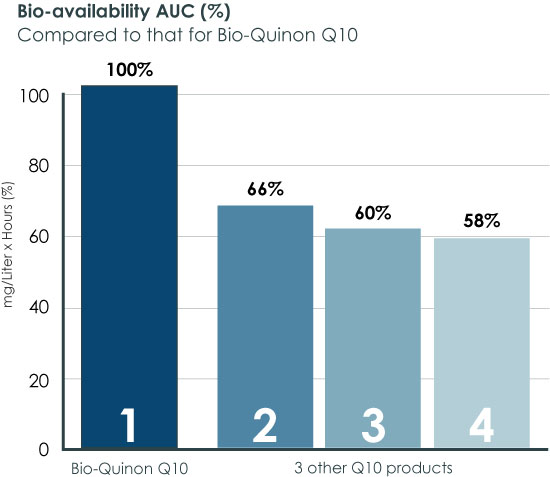
Bio-Quinone Q10's oil formulation provides higher bioavailability than other formulations
- Ref. 1. Weis M, et al. Bioavailability of Four Oral Coenzyme Q10 Formulations in Healthy Volunteers. Mol Aspect Med 199415s,273-80.
High bioavailability at body temperature
Q10 is a fat-soluble substance which is difficult for the body to absorb. However, thanks to a highly specialized manufacturing process where Q10 is dissolved in a vegetable oil solution and exposed to a patented heating process the Q10 crystals are able to dissolve entirely into single molecules at normal body temperature.
The fact that the Q10 crystals dissolve completely in this product due to its unique preheating process is the reason why Bio-Quinon Active Q10 can deliver such superior bioavailability of its active compound.
|
|
|
Q10, which is not subjected to any pre-treatment, has a crystal form which prevents an efficient uptake. (Ref. 2) |
 |
|
A poorly composition typically contains a mixture of Q 10 crystals and oil, which results in poor bioavailability of the substance. |
 |
|
Bio-Quinon Q10 has undergone a special heat treatment that changes the crystal structure to something similar to "snowflakes". |
 |
|
These "snowflakes" are dissolved completely at body temperature, thus forming a uniform (homogeneous) mixture that the body can easily absorb. |

- Ref. 2. Singh RB, et al. Effects on absorption and oxidative stress of different oral Coenzyme Q10 dosages and intake strategy in healthy men. Biofactors 2005;25(1-4):219-24.
Best in test
Significant Difference in Q10 Absorption
A Q10 preparation that cannot be absorbed in the body is a waste of money. But why is there such a big difference in absorption and what does it take to ensure good absorption of Q10? Let us try and find the answers.
In a study from 2019*, six different ubiquinone Q10 formulations were examined with quite astounding results. Even though the same Q10 raw material was used in all preparations, the absorption of Q10 showed huge variation and turned out to be highly dependent on how each preparation was produced and the type of oil used as a carrier substance. In the worst case, virtually none of the Q10 raw material in the capsule was absorbed in the body.
An analysis under a microscope shows significant differences in the structure of the CoQ10 crystals. These differences explain why some Q10 preparations are absorbed better than others.
Study Documents 3-10 Times Better Absorption
Leading clinical researchers have compared the absorption of six different Q10 preparations. Five of the test preparations contained Q10 in different oil mixtures in soft-gel capsules; one test preparation consisted of finely ground Q10 powder in a hard-gel capsule. One preparation stood out in the absorption study: "Myoqinon manufactured by Pharma Nord had a 3-10 times better absorption than any of the other five Q10 preparations."
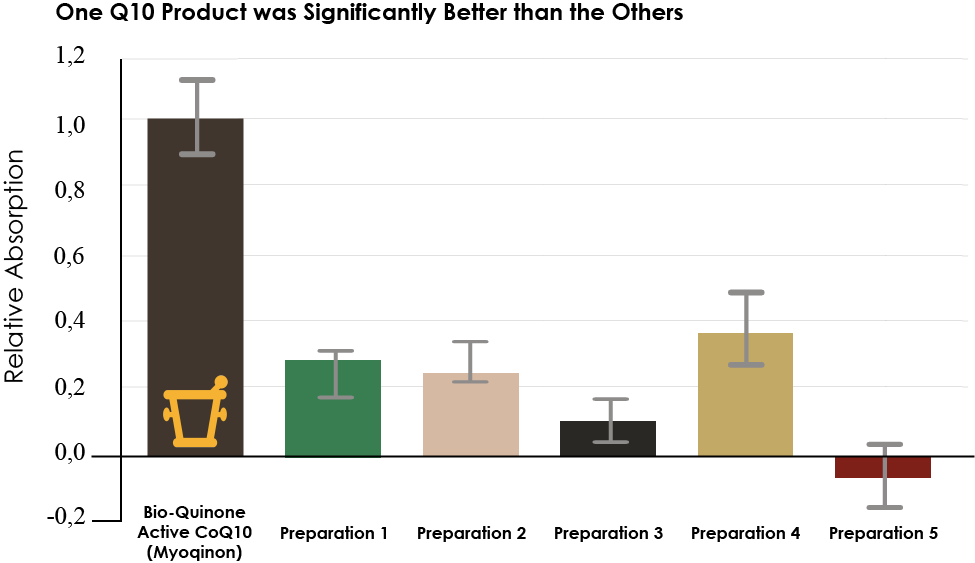
Myoqinon is the pharmaceutical version of the original Q10 product, Bio-Quinone Active CoQ10 Gold, introduced by Pharma Nord in 1991 and which has been used in many clinical studies.
The graph shows absorption levels for the six Q10 preparations from the human clinical trial, all of which contained the ubiquinone form.
*López-Lluch G, et al. Bioavailability of coenzyme Q10 supplements depends on carrier lipids and solubilization. Nutrition 2019;57:133-40.
Dose and dosage
It is not only the formulation of the preparation that determines how much Q10 the body absorbs. It also depends on the dose and the dose intervals.
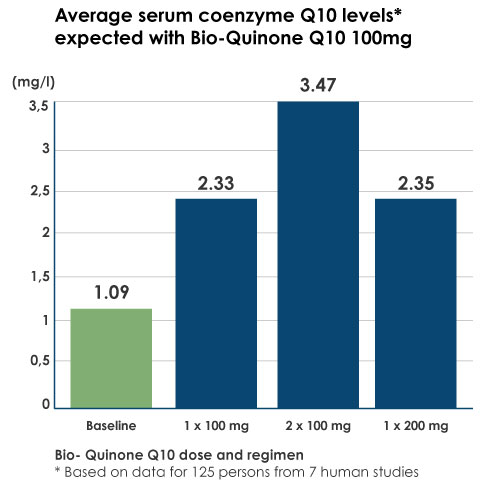
Data from a total of seven different human studies have shown that if you take two daily doses of Q10 at 100 mg each, you get a higher bioavailability than when you take a single dose of 200 mg.
Raw materials of pharmaceutical quality
Bio-Quinone Active Q10 contains 100% natural Q10. The raw material is a pharmaceutical quality and is identical to the Q10 produced by the body. This fermented Q10 does not contain impurities of unknown nature. The raw material is also completely free of the unhealthy cis-isomers, which can be found in cheap synthetic Q10 raw materials of low quality, which is normally produced from waste products from the tobacco industry.
All raw materials used in the Bio-Quinone Active Q10 undergo an extensive quality control before production of each batch.
Quality control
All Pharma Nord's dietary supplements are not only produced according to GMP (Good Manufacturing Practice) and Critical Control Points (HACCP), but in fact according to the guidelines for production of medical products. The entire Pharma Nord production meet the strict quality rules that belong to these schemes.
Every step of the production process takes place under full quality control. Everything from mixing of raw materials and packing of the finished goods to transport of the products are continuously point-checked to ensure that there is complete control with the content of each capsule right until the moment when the customers holds the products in their hands.
A very safe substance
Coenzyme Q10 is a very safe substance. There has not been registered any serious unwanted effects from supplementation in controlled trials, even at doses of 1200 mg daily for one year (Ref.3). Also more than 30 years of research and consumer experience support the safety of Bio-Quinone Active Q10.
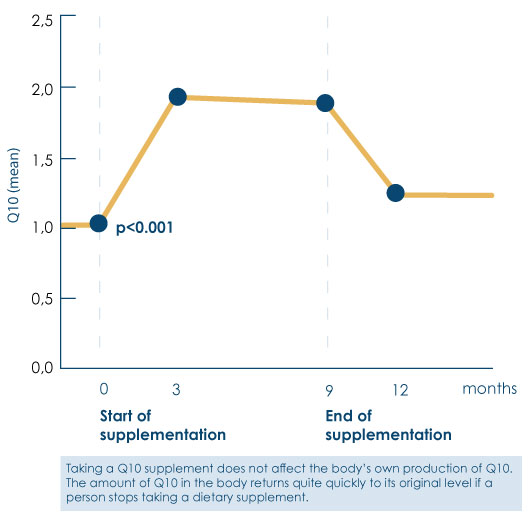
After discontinuation of supplementation the body's Q10 level will return to the same level as before the start of the supplementation study. This shows that Q10 supplementation does not affect the body's own ability to form the substance.
 Pharma Nord has a complete security file on Bio-Quinone and more than 100 published scientific studies.
- Ref 3. Horstink MW, et al. The effect of coenzyme Q10 therapy in Parkinson disease could be symptomatic. Arch Neurol 2003;60(8):1170-72.
One of the best-documented Q10 products
Many people use coenzyme Q10 daily, but are perhaps not aware that there can be large differences in the products.
If you are in doubt whether you use the right product, you can try to test your current Q10 product against Bio-Quinone Q10, The world's most widespread Q10 brand:
| Bio-Quinone Q10 |
My current Q10 product |
|
|---|---|---|
| More than 30 years of consumer experience in EU | Yes | ? |
| Scientific evidence for bioavailability | Yes | ? |
| Scientific data on safety | Yes | ? |
| Scientific evidence of effectiveness | Yes | ? |
| Reference product in international research Q10 | Yes | ? |
| Produced in Denmark under GMP control after drug standardisation | Yes | ? |
| Nature Identical Q10 - ie. Identical to the form the body uses | Yes | ? |
| Tested and proven in more than 100 scientific studies | Yes | ? |
| Documentation that the product does not affect the body's own production of Q10 | Yes | ? |
| Used daily by thousands of consumers in more than 40 countries | Yes | ? |
| A unique matrix of oil and heating method ensures that the Q10-crystals are dissolved in the stomach and can be absorbed | Yes | ? |
References
- 1. Weis M, Mortensen SA, Rassing MR, Møller-Sonnergaard J et al.: Bioavailability of Four Oral Coenzyme Q10 Formulations in Healthy Volunteers; Mol Aspects Med 1994 15s, 273-280.
- 2. Singh RB; Niaz MA; Kumar A; Sindberg CD; Moesgaard S; Littarru GP:Effect on absorption and oxidative stress of different oral Coenzyme Q10 dosages and intake strategy in healthy men.: Biofactors.: 25:1-4:219-24. (2005).
- 3. Horstink MW, van Engelen BG: The effect of coenzyme Q10 therapy in Parkinson disease could be symptomatic.; Arch Neurol 2003 60, no. 8, 1170-72
- 4. Langsjoen P, et al. Treatment of essential hypertension with coenzyme Q10. Mol Aspects Med. 1994;15 Suppl:S265-72.
- Mortensen SA. Perspectives on therapy of cardiovascular diseases with coenzyme Q10 (ubiquinone). Clin Investig. 1993;71(8 Suppl):S116-23.
Coenzyme Q10 (also called Q10) is a vitamin-like substance. It is also named ubiquinone (ubi is Latin and means ”everywhere”). In order for cells to produce energy, they must convert fat, carbohydrate, and protein into ATP (adenosine triphosphate), which is a molecule that stores cellular energy in chemical form. The cell then breaks down the ATP molecule and releases the energy trapped inside.
The entire process takes place inside the cells in small bean-shaped structures called mitochondria, all of which contain coenzyme Q10. Muscle cells are particularly dependent on large amounts of energy, which is why they have greater mitochondrial density than other types of cells. The heart muscle is a good example of body tissue with cells that contain a large number of mitochondria and have a correspondingly large energy requirement.
Q10 is a lipid-soluble compound. In its form as a raw material, the Q10 molecules tend to aggregate in large, insoluble crystal formations, which the body is practically unable to absorb. Pharma Nord has solved this problem by using a patented manufacturing technique where the raw material undergoes a special heat treatment in a unique blend of vegetable oils. This process enables the Q10 crystals to dissolve completely at body temperature. Because of the complete dissolution of the Q10 crystals, the use of a high-quality raw material, and a manufacturing process that complies with pharmaceutical standards and guidelines (GMP), Bio-Quinone Q10 Gold has been able to demonstrate superior bioavailability in clinical studies
Sources of Q10
We get relative small amounts of Q10 from several types of food, some of the best sources of Q10 in food are:
- organ meat
- meat
- herring
- soy oil
- sardines
In addition, humans are able to synthesize Q10 in the body. The process, which takes place in the body's cells, slows down as we grow older and as a result of disease. According to experts, the body’s Q10 levels peak at the age of 20-25 years from which point it begins on a downward slope.
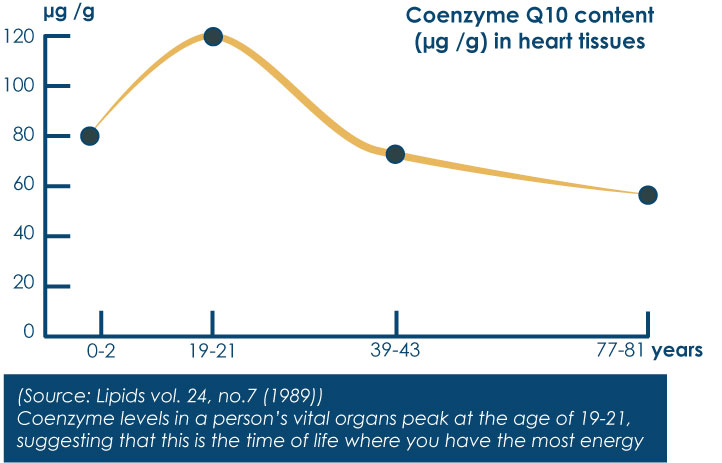
Science has not been able to quantify exactly how much Q10 is provided by means of the diet but it is estimated to be somewhere around 5-10 mg daily. The body has a Q10 reserve that amounts to about 1 – 1.5 grams. The highest concentrations are found in the heart, liver, and kidneys.
Big difference in Q10 products
Pharma Nord has spent more than 30 years documenting the absorbability, effectiveness, and safety of the product Bio-Quinone Q10. But many Q10 products are currently sold without any documentation which may give the user assurance of an effect. In the wake of this a number of claims has emerged about what kind of Q10 is best. A team of U.S. Researchers has reviewed and weeded out the false claims. What remains are the facts about the effect and use of Q10.
 Unprocessed Q10 is poorly absorbed
Optimum absorbability has been the keyword in the development of Bio-Quinone Q10, and this is documented in approx. 40 scientific studies.
One of the biggest challenges associated with Q10 as a supplement is that the substance generally is not readily absorbed by the body. Q10 in other words, has a low bioavailability. The Q10 molecule is a relatively large molecule and this is the main reason for its poor absorbtion in the body and as a result of its molecular structure, it is fat soluble.
Slowly release into the blood
Q10 is absorbed in the intestinal wall along with fat and is then transported by the lymph vessels to the subclavian vein, where it emptied into the venous blood. This slow mode of transport results in a maximum concentration of Q10 in the blood approximately 6 hours after ingestion. Therefore, it is preferable to take Q10 with breakfast or perhaps lunch. If you take more than 1 capsule daily, the effect is larger by spreading the dose throughout the day - eg. one capsule at breakfast and one capsule at lunch time - rather than taking the daily dosage at once.
Crystals are not absorbed
A Bio-Quinone Q10 capsule contains a special oil matrix in which the substance Q10 is in a molecular form. The starting point for all products is the Q10 raw material consisting of crystals, which in practice are not absorbed by the body. Q10 must be dissolved into single Q10 molecules before they can be absorbed. Less than 1% of Q10 is absorbed from products solely consisting of crystalline Q10, typically tablet products and hard capsules using unprocessed Q10 crystals. The crystals may be dissolved by using a special oil mixture, and a subsequent heating method, thereby, releasing Q10 into single molecules, which provides a quick and good absorption with oil.
Q10 always fat-soluble
A marketing strategy has gone on to claim that it is better to make Q10 water soluble, but neither a change to the Q10 molecule or placement of the fat-soluble Q10 molecules in liposomes (small spheres with an outer fatty membrane and an inner aqueous membrane) or linking Q10 to micelles (small spheres with a fatty core and a water-loving surface) or attaching nano-particles to Q10 will make the Q10 molecule more water soluble.
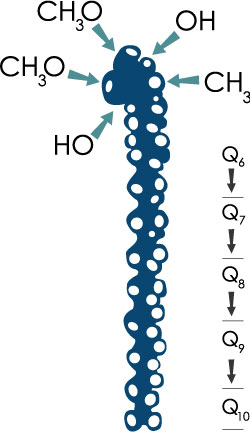
If you try, you just end up with an even bigger Q10 molecule complex, but no increased bioavailability and the Q10 molecule will still predominantly be fat soluble. If you choose to go the opposite way and make the molecule smaller, this will surely make the molecule more water soluble and more absorbable, but such a reduced molecule will no longer be Q10, but would be reduced to Q9 or Q8 which is of no value to humans.
Most documentation on ubiquinone
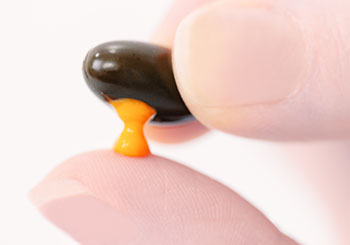
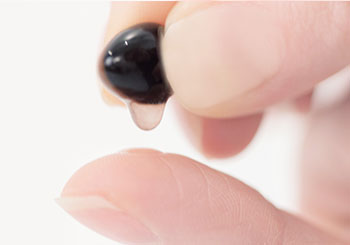
 Q10 is found in two forms. An oxidized form called ubiquinone as well as a reduced form called ubiquinol. Ubiquinol is also marketed as active Q10 although ubiquinol isn't more active than ubiquinone. The form of Q10 we produce in our cells, is the oxidized ubiquinone. Also Q10 from our food is predominantly the oxidized form. When we absorb the oxidized ubiquinone from the intestine it is automatically converted to reduced ubiquinol. In the blood and lymphatic system 90-95% of Q10 is in the form of ubiquinol. In the cells' energy-producing mitochondria Q10 alternate continuously between these two forms, a feature that is crucial for Q10s effects in the body.
Therefore, it is of minor importance what form of Q10 you consume, your body will still convert the oxidized ubiquinone to reduced ubiquinol. To date, most documentation on efficacy and safety are done with the oxidized form, ubiquinone.
- Ubiquinone = oxidized Q10
- Ubiquinol = reduced Q10
 |
 |
| Ubiquinone | Ubiquinol |
Scientific research
All Pharma Nord's products are based on thorough scientific research. Pharma Nord's own research department is continuously working to be fully abreast of the latest knowledge about health and nutrition. This requires detailed monitoring of the research development, just like Pharma Nord plans and conducts scientific studies of its own products in collaboration with some of the world's leading Q10 experts.
The sea buckthorn material in BioActive Omega 7 are wild grown. The sea buckthorn berries are of European Union and Western Himalayan region origin.
Niacin Equivalent, which means how much overall niacin (vitamin B3) is in the product.
The cell contains proteins called sirtuins and they require NAD to function. Sirtuins are important for multiple biochemical processes necessary for cellular functioning and include the regulation of inflammation and oxidative stress.
Nicotinamide adenine dinucleotide (NAD) + hydrogen
The yeast cells used as selenium source in our Bio-Selenium + Zinc tablets have grown on a mixture of nutrients consisting of glucose extracted from non-GMO corn - as well as various vitamins and minerals.
Ideally, split the 2 capsules throughout the day. If this is inconvenient you can take both capsules at one time.
Preferably with meals.
If taken as recommended (1-2 capsules per day):
50 capsules – 25 day supply (based on 2 capsules per day)
Preferably with meals.
Note: Taking it with the first meal of the day will help you get the most out of Bio-Multi Woman.
L-arginine is an amino acid naturally found in most foods. Pycnogenol, French maritime pine bark extract, has been demonstrated to be non-toxic.
If taken as recommended (first 2 weeks – 4 tablets a day and thereafter 2 tablets a day):
60 tablets – 16 day supply
Calcium supplements are available in a variety of chemical forms, such as carbonate and gluconate. The elemental calcium provided varies with chemical form, e.g. calcium carbonate provides 40% elemental calcium, whereas calcium gluconate provides only 9% elemental calcium.
Bio-Calcium + D3 + K1 + K2
Our Calcium tablets each contain 500mg of calcium (as calcium carbonate) giving an optimal balance of elemental calcium and bioavailability.
The cultures in this product may contain residues of milk protein. Due to this uncertainty, there is an allergy warning on the box and we would therefore not recommend this product for people who are allergic to milk proteins.
SBA24 Sea buckthorn oil capsules contain no animal derived products (vegan) and contain no ethyl alcohol, making it compatible with standard kosher diets.
SBA24 Sea buckthorn oil capsules contain no animal derived products (vegan) and contain no ethyl alcohol, making it compatible with standard halal diets.
Preferably taken with a meal and a drink.
Yes. However, those who have difficulty swallowing capsules, can pierce and squeeze out the contents.
If taken as recommended ( 1-3 capsules per day):
- 60 capsules – 20 day supply (based on 3 capsules per day)
- 150 capsules – 50 day supply (based on 3 capsules per day)
Ubiquinol is produced naturally within young and healthy bodies. Therefore, it’s recommended that men and women over the age of 40 should consider taking an ubiquinol CoQ10 supplement.
There is now a great deal of evidence from scientific studies on the consequences of this effect. The type of medication in question is commonly referred to as "statins".
Statins are a class of cholesterol-lowering drugs that act by inhibiting the enzyme HMG-CoA reductase, which reduces the body's production of the substance mevalonate. From mevalonate, several substances are formed in the liver, including cholesterol and Q10. You cannot lower the body's cholesterol production in this way without also lowering its production of Q10.
There are different types of statins working in different ways, and they are not equally strong. The most common complaint about the adverse effects of statins is muscle pain. The pain occurs when the muscles have to work with too little energy.
However, not everybody experiences adverse effects from statins. The effect differs from individual to individual depending on how much Q10 is required to normalize the body's Q10 level during statin treatment.
You must monitor your own body's needs.
If taken as recommended (first 2 weeks 4 capsules a day and thereafter 2 capsules a day):
- 60 capsules – 16 day supply
- 150 capsules – 61 day supply
- 300 capsules – 136 day supply
The body produces Q10 on its own and because there is Q10 in almost any diet, it is seemingly impossible to categorize supplementation with Q10 as doping.
Q10 acts as a coenzyme (supporting enzyme) in the cells and thus also in the muscles' energy production mitochondria. We can produce some Q10 in the liver, and, in addition we get minor amounts of Q10 from the diet. Many athletes do take supplements of Q10 to counteract declining Q10 levels, and the Q10 supplements are not categorised as doping.
Omega 7 can help people who suffer from a dry mouth, dry eyes and intimate dryness. It helps to reduce fat cell accumulation so that our blood can continue to flow easily. "The fatty acids found in Omega 7 may also help to lower LDL cholesterol (sometimes referred to as "bad" cholesterol) and increase HDL cholesterol (sometimes referred to as "good" cholesterol). According to the Cancer Association of South Africa (CANSA), Omega 7 helps to reduce insulin resistance, lowers blood glucose and fights obesity.
Most people will experience an effect of Q10 supplementation, either directly or indirectly. Many so-called energy-based products get their effect from caffeine and caffeine-like substances from various plants that stimulate the adrenal glands to secrete stress hormones.
Coenzyme q10, on the other hand, is present in all body cells and is part of the cells' natural way of producing energy. Thus, the biochemical processes in the body and the experience are not the same for these two different types of products.
The fact that you may not feel an immediate effect of Q10 may also be due to one or more of the following factors:
- You are taking a Q10 product with low bioavailability
- You take your Q10 between meals and not together with fat
- You have reduced fat absorption from the gut
- You are so young that your Q10 level is still high
- You are taking medicines that reduce the body's own production of Q10 to a degree that requires a higher compensatory Q10 dosage
- You take Q10 for supper and will therefore only experience the maximum level in the blood at night while you are sleeping (it takes approx. 6 hours from ingestion until Q10 reaches its maximum level in the blood)
- You need more time. It can take a month or longer before the body's tissues are sufficiently saturated with Q10
- You need a higher dose
To date, more than 40 scientific studies have been published, showing that, once it has been absorbed, the ubiquinone form of Q10 has a relatively good bioavailability and efficacy. However, not much evidence has been published on the bioavailability and efficacy of QH (ubiquinol).
Various Q10 products are available either as tablets or as capsules. The Q10 content may be in the form of crystals or granules, encapsulated in liposomes, in micelles attached to nanoparticles or dissolved in oil.
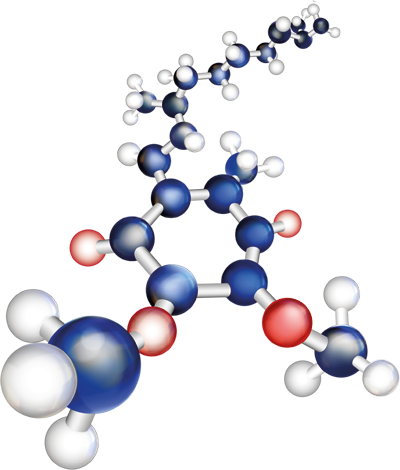
The size alone of the Q10 molecule (approx. 5.5 nm long and 864 times heavier than a hydrogen atom) means that Q10 is basically not an easily absorbed substance. The Q10 raw material is an organic orange brown crystalline powder and Q10 crystals are too large to be absorbed into the body. The uptake of unprocessed Q10 powder and of tablets is therefore very poor.
In addition, Q10 is a fat-soluble substance that has to be absorbed in the small intestine along with fat. It is possible to attach other substances to the Q10 molecule that will make it somewhat more water-soluble, but doing so will make the big Q10 molecule even bigger, whereby the advantage disappears, and the Q10 complex will still largely be fat-soluble.
It sounds impressive to state that a Q10 product is three times more absorbable than a competing product, but if the competing product simply consists of Q10 crystals with a less than 1% absorption rate, the claim is not particularly impressive.
Producers of Q10 supplements have to treat the Q10 raw material in a special way in order to achieve an effective absorption. The most bioavailable Q10 products are dissolved in a vegetable oil in which the crystals must be dissolved completely.
Cereal products usually contain coenzyme Q9, whereas soybeans do contain some coenzyme Q10. There is also some Q10 in walnuts, almonds, oil-rich fruits and green vegetables, especially spinach.
Furthermore, fish contains Q10, especially sardines, which contain twice as much Q10 as beef. Even so, one would have to eat one pound of sardines, two pounds of beef, or 2.5 pounds of peanuts in order to get 30mg of Q10.
Typically, there is somewhere between 5-10mg of Q10 in the food we eat on a daily basis. Most individuals probably get around 5mg a day.
Don't worry!
The oil in the capsule has a mild flavor and can be squeezed out on a piece of bread or mixed in with other food; for example, porridge. They shouldn't even notice that they've had it.
Some children dislike the taste of fish and may, therefore, benefit from using BIOmega-3 Kids as it has a pleasant lemon flavor. The lemon flavor also helps prevent unpleasant "fish burps" that may occur during the day.
It is possible to increase the body's own production of coenzyme Q10 by exercising and by optimising the intake of nutrients.
The cell's production of Q10 is a complex process involving many biochemical steps. In order for the body to produce coQ10, there is a need for a vitamin B complex, vitamins C and E, selenium, magnesium and several trace elements.
A lack of one or more of these nutrients will affect the body's Q10 production considerably. An increase in available Q10 in the body will usually be larger with the aid of even a small daily supplement of Q10.
If taken as recommended ( 1-2 capsules per day):
80 capsules – 40 day supply (based on 2 capsules per day)
Q10 is best known for its oxidised form ubiquinone, introduced in Europe shortly after 1990. Globally, ubiquinone has also been the only form of Q10 whose effect has been documented in scientific studies.
Ubiquinol, the reduced form of Q10, was first brought to market in 2006. Since then, ubiquinol has been marketed as active Q10 although it's no more active than ubiquinone. Almost all documentation on the prevention and treatment of Q10 deficiency states has been performed with ubiquinone.
At the molecular level, ubiquinol has two extra hydrogen molecules and forms, in conjunction with oxygen, and so-called hydroxyl group on the head of the Q10 molecule, which is a quinone ring.
The two forms of Q10, however, have quite different roles in the body. Ubiquinol donates electrons, whereas ubiquinone receives electrons.
Ubiquinol performs an important function as an antioxidant in the body, but in the cells' energy producing mitochondria, the two forms constantly switch from the one form to the other - that is, from the oxidised to the reduced and back again. Thus, one cannot say that one form of Q10 is more active or more important than the other.
Appearance differences can be seen below, it is therefore easy to test whether the product you buy is normal or reduced Q10. The Q10 that we produce in the body's cells is oxidised Q10, whereas 90-95% of Q10 circulating in the blood is in the form of reduced Q10.
Omega 3 fatty acids are a group of essential, polyunsaturated fatty acids that are primarily found in fish, namely oily fish like herring, salmon, and mackerel.
The two most important omega-3 fatty acids are eicosapentaenoic acid (EPA) and docosahexaenoic acid (DHA). EPA and DHA have several positive health benefits. For instance, a 200 mg per day intake of DHA contributes to the normal development of the brain, eyes, and vision of infants and younger children. In adults, 250 mg of DHA each day contributes to maintaining normal brain and heart function. In addition, it supports a normal heart function. The mentioned levels correspond with 2 (200mg) and 3 (250mg) Bio-Fish Oil capsules daily.
Omega-3 fatty acids are important building blocks in all cells and ensure that cell membranes are sufficiently flexible and have the right fluid content, both of which are important for the correct functioning of cells.
Yes, as it is a soft bovine gelatine capsule with an oval shape, that is easy to swallow.
Q10 is generally considered a safe substance.
Long-term studies of more than 5 years, as well as studies with daily doses, have shown that it is safe to take supplements of Q10 for a long period.
After discontinuation of supplementation, the body's Q10 level will return to the same level as before the start of supplementation. This shows that Q10 supplementation does not affect the body's own production of the substance.
If taken as recommended (5 capsules per day):
- 120 capsules – 24 day supply
- 240 capsules – 48 day supply
Preferably with meals.
Note: Taking it with the first meal of the day will help you get the most out of Bio-Multi Vitamin and Mineral.
If taken as recommended ( 1-2 tablets per day):
- 60 tablets – 30 day supply (based on 2 tablets per day)
- 150 tablets – 75 day supply (based on 2 tablets per day)
If taken as recommended (1 tablet per day):
60 tablets – 60 day supply
Since Q10 is fat-soluble substance, it is important to take it with a meal that contains some fat. The effect is observed after a short-term use and is felt most acutely approx. 6 hours after ingestion.
Therefore, Q10 should most effectively be taken with breakfast, perhaps lunch. If you take more than 1 capsule of ubiquinone per day, the absorbability will be larger if you spread the dose throughout the day - i.e. 1 capsule at breakfast and 1 capsule at lunch time.
Furthermore, you can take a supplement of the amino acid carnitine, which interacts closely with Q10 in the cells' mitochondria. Carnitine helps with the transport of fatty acids into the mitochondria, and Q10 is involved in the oxidation process that converts these fatty acids into energy in the form of ATP.
You can cut a small hole in the soft gel capsules with a pair of scissors and squeeze the content of the capsule out in a spoon or directly into your mouth. However a small residue of Q10 will remain on the inside of the capsule using this method.
Preferably with meals.
Those who have difficulty swallowing tablets might find it easier to do so after consuming food.
You can also cut the tablet in half or crush it to consume immediately.
Bio-Quinone Active Q10 Super if taken as recommended ( 1-3 capsules per day):
- 30 capsules – 10 day supply ( based on 3 capsules per day)
- 60 capsules – 20 day supply ( based on 3 capsules per day)
- 150 capsules – 50 day supply ( based on 3 capsules per day)
Bio-Quinone Active Q10 GOLD if taken as recommended ( 1-4 capsules per day):
- 60 capsules – 15 day supply ( based on 4 capsules per day)
- 150 capsules – 37 day supply ( based on 4 capsules per day)
If taken as recommended (2 tablets per day):
120 tablets – 60 day supply
Generally not, but in a few instances people have experienced broken sleep after taking Q10 in the evening. If you should experience this it is recommended to take your Q10 at breakfast or lunch.
Ideally, leaving around 3 hours between each capsule can help improve the absorption.
Preferably with meals.
If taken as recommended (2-4 capsules per day):
- 60 capsules – 15 day supply (based on 4 capsules per day)
- 150 capsules – 37 day supply (based on 4 capsules per day)
The product contains no live yeast, so will not contribute to candida albicans. The yeast for allergy purposes only.
Preferably after food.
The magnesium tablets can dissolve quickly in a glass of water, taken before bed.
Those who have difficulty swallowing tablets might find it easier to do so after consuming food.
You can cut the tablet in half or crush it to consume immediately.
Otherwise, you can dissolve the tablet quickly in a glass of water.
Please consult a medical professional before making any changes to your medicine regime.
If taken as recommended (1 -2 tablets per day):
- 60 tablets – 30 day supply (based on 2 tablets per day)
- 150 tablets – 75 day supply (based on 2 tablets per day)
Preferably with meals.
If taken as recommended (first week 4 tablets a day and thereafter 2 tablets a day):
- 30 tablets – 8 day supply
- 60 tablets – 23 day supply
- 150 tablets – 61 day supply
Use within 6 months of opening.
Preferably with meals.
Like any supplement, Lady Prelox needs time to unfold its beneficial actions in the body. Research tells us you should start feeling its effects after four weeks but for optimal results it appears to take up to eight weeks. As not all women are alike, the time frame for the product to unfold its virtues may vary from one to another, and will depend on lifestyle diet, physical and emotional activity and other aspects.
Yes, Lady Prelox is the result of research, culminating in clinical trials. Lady Prelox has been shown to help women rediscover sexual pleasure and comfort. Lady Prelox helps women experience sexual satisfaction and closeness to their partner.
Lady Prelox is a patented blend of premium plant-based ingredients. Among them, there is Pycnogenol, a botanical extract from the bark of the French maritime pine tree and known for its potent antioxidant properties. Pycnogenol is supported by 40 years of research, including 300 scientific publications, 100 clinical trials and the total number of patients tested with Pycnogenol exceeds 7,000. Rosvita is a branded, patented rose hip extract that originates from the blossoms/fruit of the wild rose plant; it is a potent antioxidant which contains vitamin C.
If taken as recommended (1-2 tablets per day):
- 30 tablets – 15 day supply (based on 2 tablets per day)
- 90 tablets – 45 day supply (based on 2 tablets per day)
- 360 tablets – 180 day supply (based on 2 tablets per day)
No serious adverse effects had been observed or reported in clinical trials. Blood of women taking Lady Prelox was carefully investigated for any kind of parameters indicative for safety concerns, and none were found. Rarely, women taking Lady Prelox may experience mild transient side effects such as gastro-intestinal discomfort, headache, nausea and dizziness. It is best to take Lady Prelox with or after meals to avoid any minor stomach discomfort. Should you experience pain during sexual intercourse or suffer from abdominal pain it is recommended that you consult your doctor. If you rely on prescription medication please consult your physician to find out whether taking nutritional supplements will be safe for you.
Lady Prelox is a patented and proprietary formula, a result of years of scientific research, which contains premium ingredients combined to synergestically promote sexual comfort and pleasure. Lady Prelox is designed to help women rediscover sexual pleasure, desire and comfort.
Preferably with a meal.
If taken as recommended (2 tablets per day):
60 tablets – 30 day supply
Selenium is found in such things as fish, nuts, whole-grain.
Preferably with a meal.
100mcg if taken as recommended (1-2 tablets per day):
- 60 tablets – 30 day supply (based on 2 tablets per day)
200mcg if taken as recommended (1 tablet per day):
- 60 tablets – 30 day supply
- 150 tablets – 75 day supply
Relative to the food we eat, the size of individual nutrients are actually incredibly small. As a result, we need to use units other than grammes (g) to describe them. Here’s what the common units for nutrients are:
Grammes (G)- often used to describe nutritional powders. Most teaspoons of powder weigh approximately 5g.
Milligrams (Mg)- 1000mg is equal to 1g
Micrograms (Mcg or μg)- 1000μg is equal to 1mg
International Units (IU)- Slightly more complex than milligrams (mg) and micrograms (μg), International Units measure differently from nutrient to nutrient. The most common nutrients that are likely to be measured in IU are vitamins D, E and A.
- Vitamin D: 1 IU is the equivalent of 0.025 μg of D2 or D3
- Vitamin A: 1 IU is the equivalent of 0.3 mcg retinol
- Beta-carotene (provitamin A): 1 IU is the equivalent of 0.6 μg of beta carotene
- Vitamin E: 1 IU is the equivalent of 0.67 mg d-alpha-tocopherol
Anytime, to be taken with food.
If taken as recommended (1 capsule per day):
125 capsules – 125 day supply
If taken as recommended (1 capsules per day):
60 capsules – 60 day supply
Preferably with meals.
If taken as recommended (2 tablets per day):
150 tablets – 75 day supply
Preferably with a meal.
If taken as recommended (1-3 tablets per day):
- 60 tablets – 20 day supply (based on 3 tablets per day)
- 140 tablets – 46 day supply (based on 3 tablets per day)
Before food, particularly before you indulge in rich food.
If taken as recommended (2 capsules per day):
60 capsules – 30 day supply (based on 2 capsules per day)
This product contains no animal derived ingredients or alcohol, it will be suitable for most halal diets.
If you require more information please contact us.
Preferably with a meal.
If taken as recommended (1-2 tablets per day):
- 60 tablets – 30 day supply (based on 2 tablets per day)
- 150 tablets – 75 day supply (based on 2 tablets per day)
Bio-InfluZinc is designed to allow good absorption through the mouth and into the bloodstream.
It’s preferable to let the tablet dissolve in the mouth rather than swallowing it whole
Based on the evidence there's unlikely to be any issue, though consult your doctor if you're unsure.
The K-Pearls raw material is a synthetic form, manufactured via a patented process. It is a pure trans form and the K2 produced is 100% nature-identical.
We have previously tested another K2 that was made from fermented natto, but it could not meet our quality requirements.
In 2016 research demonstrated that synthetic vitamin K2 and naturally fermented K2 are biologically equivalent, including mechanisms of action and biological effect.
A) In those with the medical condition ‘sarcoidosis’, vitamin D may elevate levels of blood calcium, leading to hypercalcaemia.
If taken as recommended (1 tablet per day):
150 tablets – 150 day supply
To be taken after meals.
If taken as recommended (4-12 tablets per day):
120 tablets – 10 day supply (based on 12 tablets per day)
If taken as recommended (1 tablet per day):
60 tablets – 60 day supply.
Preferably with a meal and with plenty of water.
Vitamin D2 is only available from the diet. It is produced by certain fungi and plants when they are exposed to ultraviolet light. Both vitamin D2 and D3 require subsequent activation in the liver and kidneys in order to become biologically active. Science used to believe that both forms of vitamin D were equally effective in the body.
However, depending on the measuring method used, vitamin D3 is 56-87 per cent more effective than vitamin D2 when it comes to raising blood levels of vitamin D. Moreover, D3 is stored in fat tissue more than three times as effectively as D2. *
* Heaney RP, et al. Vitamin D3 Is More Potent Than Vitamin D2 in Humans. J Clin Endocrinol Metab 2010.
Our vitamin D is sourced from lanolin, from sheep's wool.
If taken as recommended (2 tablets per day):
60 tablets – 30 day supply
400IU if taken as recommended (1-5 capsules per day):
- 120 capsules – 24 day supply (based on 5 capsules per day)
800IU and 1,000IU if taken as recommended (1-5 capsules per day):
- 80 capsules – 16 day supply (based on 5 capsules per day)
5,000IU if taken as recommended (1 capsule per day):
- 40 capsules – 40 day supply
Preferably during the day, avoid taking before bed.
Preferably with a meal.
If taken as recommended (1-2 capsule per day):
60 capsules – 30 day supply (based on 2 capsules per day)
If taken as recommended (2 capsules 3 times per day):
60 capsules – 10 day supply (based on 6 capsules per day)
If taken as recommended (3-6 pastilles per day):
90 pastilles – 15 day supply (based on 6 pastilles per day)
Related Products
 Bio-Carnitine as carnitine is involved in transport and oxidation of fatty acids into the mitochondria where Q10 contributes to their metabolism.
 SelenoPrecise as selenium is integrated in selenoproteins involved in keeping Q10 in its reduced form in the body.

Zymbion Q10 Toothpaste increases the amount of coenzyme Q10 in the gingival pockets. This external supply is complemented by internal Q10 from Bio-Quinon Q10.