
Why Pharma Nord Ubiquinone CoQ10?

- Delivers real therapeutic benefit
- Supported by scientific evidence in more than 90 clinical studies
- 100% nature identical - the same form that the body produces
- Q10 used in the prestigious KiSel10 and Q-SYMBIO research trials
- Official reference product for ICQA (International Coenzyme Q10 Association)
- Trusted by customers, doctors, nurses, pharmacists, practitioners and health stores for over 30 years
- Gluten Free / Lactose Free / Soy Free / Yeast Free / Sugar Free
- Available in 30mg packs of 30, 60 and 150 and 100mg packs of 60 and 150 capsules
Bio-Quinone Active Q10 Super 30mg
- Description
- Data
- FAQ
- Reviews
Ubiquinone CoQ10 is Pharma Nord’s Bio-Quinone Active Q10 capsule, containing coenzyme Q10 in the form of ubiquinone in its natural identical form. This unique preparation delivers coenzyme Q10 in the active formula that is present in over 90 scientific studies to provide a consistently high level of bioavailability.
Coenzyme Q10 is essential for the normal functioning of all tissues due to its role in the cellular energy production process. Both heart and skeletal muscles have the highest energy requirements of all bodily tissues, and are particularly reliant on adequate Q10 as a result.
We have spent more than 25 years developing and optimizing Bio-Quinone Q10 for the sole purpose of producing a coenzyme Q10 preparation which scientifically can document its superior bioavailability and quality.
Ubiquinone Q10 is the reference product for the International Coenzyme Q10 Association
What is Coenzyme Q10?
Coenzyme Q10 occurs naturally within every cell in the human body, we cannot live without it. It is a vitamin-like substance which is found in our mitochondria (structures within cells responsible for energy production). It is also important as an antioxidant, associated with various health benefits.
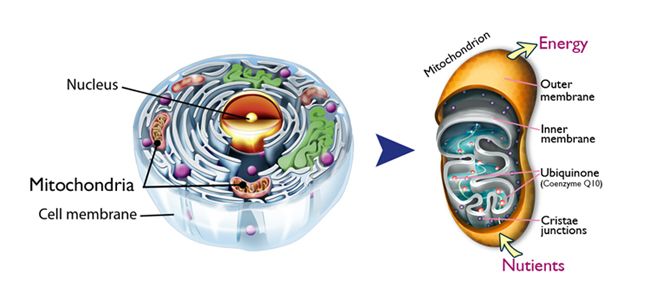
Approximately three quarters of the body’s Q10 is made within the liver. You can obtain small amounts of coQ10 from food. Our Q10 levels peak between the ages of 20 and 25. As the body’s ability to manufacture/absorb Q10 declines with age, our levels of Q10 will also decline. Dietary supplementation can help to maintain optimal levels of coenzyme Q10 within the body.
Q10 Quality
100% Nature Identical
Ubiquinone coQ10 contains 100% natural Q10.
The raw material is produced by specialized yeast cells and is identical to the coenzyme Q10 produced by the body. In contrast to bacteria-fermented Q10, this yeast-fermented Q10 does not contain any yeast components or impurities of unknown nature. The raw material is completely free of harmful cis-isomers, often found in cheap synthetic Q10 raw materials of low quality. All raw materials used in the Bio-Quinone Active Q10 supplement undergo an extensive quality control before production.
Using a special manufacturing technique the Q10 crystals completely dissolve at body temperature. It is this complete solution of Q10, a high quality raw material and manufacturing according to the pharmaceutical and the GMP protocol, which is the reason that Bio-Quinone Active Q10 supplement has achieved such good bioavailability of the active substance.
Pharma Nord Patented Process
Q10 is a fat-soluble substance which is difficult for the body to absorb. However, thanks to a highly specialized manufacturing process where coQ10 is suspended in an oil matrix and exposed to a patented heating process, the Q10 crystals are able to dissolve entirely into a single molecule at normal body temperature. This is the reason why Bio-Quinone Active Q10 supplement has achieved such good bioavailability of the active substance.
Process
 |
 |
 |
 |
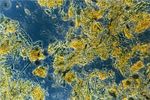
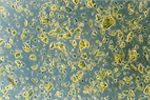
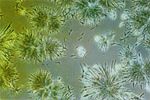
| Unprocessed Q10, which has not been subjected to any pre-treatment, has a crystal form that hinders effective absorption. | An inferior preparation is more like a mixture of Q10 crystals and oil, resulting in poor bioavailability of the active Q10. | A special heat process that transforms the molecular structure of Q10 from rough crystals to a snow-flake like shape. | At body temperature, the snow-flake Q10 dissolves, thus forming a uniform (homogeneous) mixture that the body can easily absorb. |
Bioavailability: It matters!
What is bioavailability?
Bioavailability is the proportio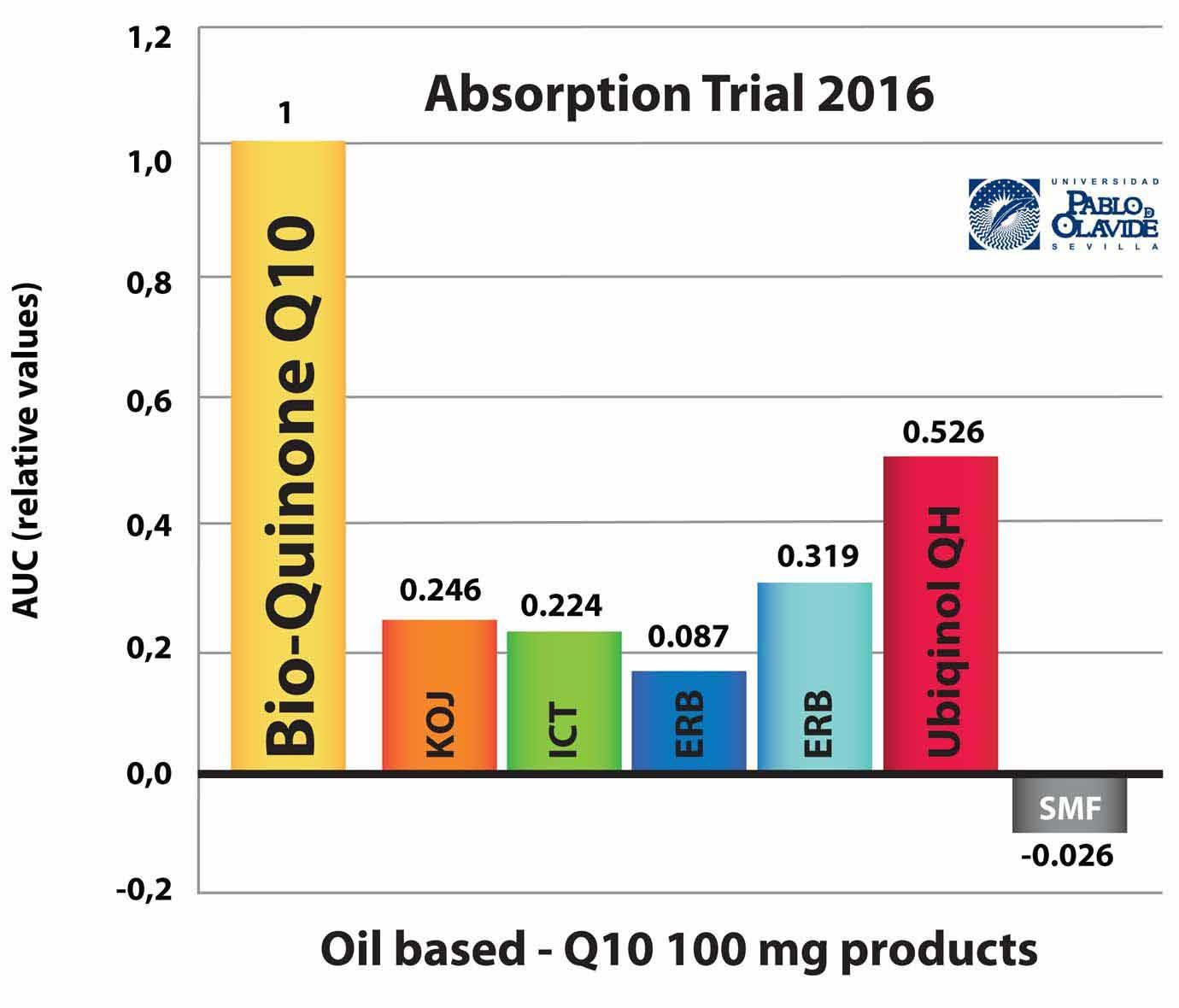 n of substance that reaches the systemic blood circulation after oral consumption. Bio-Quinone uses a patented method to release crystal structure Q10. As a result, Bio-Quinone was selected for the prestigious KiSel10 and Q-SYMBIO trials.
Optimal Oil Formulation
Pharma Nord Q10 supplements are shown to raise blood levels of coenzyme Q10 in human subjects, with extensive supporting documentation.
Several clinical trials have shown that the Bio-Quinone patented formulation delivers superior bioavailability.
| Each Bio-Quinone Super 30mg capsule contains | %NRV* | |
|---|---|---|
| Ubiquinone (Cozenyme Q10) dissolved in soybean oil | 30mg | ** |
| Vitamin B2 | 1.4mg | 100% |
* NRV: Nutrient Reference Value.
** NRV not established.
Product Facts
Directions:
1- 3 capsule per day or as recommended by a physician. To be taken with food.
Do not exceed recommended amount.
Not suitable for vegetarians.
Pregnant and lactating women and those on medication should seek professional advice prior to taking supplements.
Nutritional supplements should not be used as a substitute for a varied diet and a healthy lifestyle.
Patented manufacturing method, EP 3 190 898 B1.
Ingredients:
Bulking agent: Soybean Oil
Capsule shell: Bovine Gelatine
Humectants: Glycerol
Co-enzyme Q10
Antioxidant: D-alpha-tocopherol
Humectants: Purified water
Colour: Iron oxide, riboflavin
Vitamin: B2 (riboflavin)
Storage:
Room temperature out of direct sunlight. Keep out of reach of children.
Shelf Life:
Minimum 5 years.
There is now a great deal of evidence from scientific studies on the consequences of this effect. The type of medication in question is commonly referred to as "statins".
Statins are a class of cholesterol-lowering drugs that act by inhibiting the enzyme HMG-CoA reductase, which reduces the body's production of the substance mevalonate. From mevalonate, several substances are formed in the liver, including cholesterol and Q10. You cannot lower the body's cholesterol production in this way without also lowering its production of Q10.
There are different types of statins working in different ways, and they are not equally strong. The most common complaint about the adverse effects of statins is muscle pain. The pain occurs when the muscles have to work with too little energy.
However, not everybody experiences adverse effects from statins. The effect differs from individual to individual depending on how much Q10 is required to normalize the body's Q10 level during statin treatment.
You must monitor your own body's needs.
The body produces Q10 on its own and because there is Q10 in almost any diet, it is seemingly impossible to categorize supplementation with Q10 as doping.
Q10 acts as a coenzyme (supporting enzyme) in the cells and thus also in the muscles' energy production mitochondria. We can produce some Q10 in the liver, and, in addition we get minor amounts of Q10 from the diet. Many athletes do take supplements of Q10 to counteract declining Q10 levels, and the Q10 supplements are not categorised as doping.
Most people will experience an effect of Q10 supplementation, either directly or indirectly. Many so-called energy-based products get their effect from caffeine and caffeine-like substances from various plants that stimulate the adrenal glands to secrete stress hormones.
Coenzyme q10, on the other hand, is present in all body cells and is part of the cells' natural way of producing energy. Thus, the biochemical processes in the body and the experience are not the same for these two different types of products.
The fact that you may not feel an immediate effect of Q10 may also be due to one or more of the following factors:
- You are taking a Q10 product with low bioavailability
- You take your Q10 between meals and not together with fat
- You have reduced fat absorption from the gut
- You are so young that your Q10 level is still high
- You are taking medicines that reduce the body's own production of Q10 to a degree that requires a higher compensatory Q10 dosage
- You take Q10 for supper and will therefore only experience the maximum level in the blood at night while you are sleeping (it takes approx. 6 hours from ingestion until Q10 reaches its maximum level in the blood)
- You need more time. It can take a month or longer before the body's tissues are sufficiently saturated with Q10
- You need a higher dose
To date, more than 40 scientific studies have been published, showing that, once it has been absorbed, the ubiquinone form of Q10 has a relatively good bioavailability and efficacy. However, not much evidence has been published on the bioavailability and efficacy of QH (ubiquinol).
Various Q10 products are available either as tablets or as capsules. The Q10 content may be in the form of crystals or granules, encapsulated in liposomes, in micelles attached to nanoparticles or dissolved in oil.
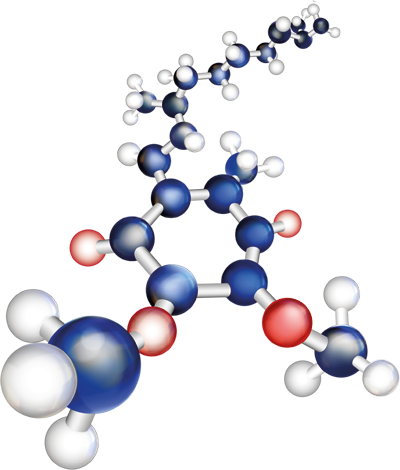
The size alone of the Q10 molecule (approx. 5.5 nm long and 864 times heavier than a hydrogen atom) means that Q10 is basically not an easily absorbed substance. The Q10 raw material is an organic orange brown crystalline powder and Q10 crystals are too large to be absorbed into the body. The uptake of unprocessed Q10 powder and of tablets is therefore very poor.
In addition, Q10 is a fat-soluble substance that has to be absorbed in the small intestine along with fat. It is possible to attach other substances to the Q10 molecule that will make it somewhat more water-soluble, but doing so will make the big Q10 molecule even bigger, whereby the advantage disappears, and the Q10 complex will still largely be fat-soluble.
It sounds impressive to state that a Q10 product is three times more absorbable than a competing product, but if the competing product simply consists of Q10 crystals with a less than 1% absorption rate, the claim is not particularly impressive.
Producers of Q10 supplements have to treat the Q10 raw material in a special way in order to achieve an effective absorption. The most bioavailable Q10 products are dissolved in a vegetable oil in which the crystals must be dissolved completely.
Cereal products usually contain coenzyme Q9, whereas soybeans do contain some coenzyme Q10. There is also some Q10 in walnuts, almonds, oil-rich fruits and green vegetables, especially spinach.
Furthermore, fish contains Q10, especially sardines, which contain twice as much Q10 as beef. Even so, one would have to eat one pound of sardines, two pounds of beef, or 2.5 pounds of peanuts in order to get 30mg of Q10.
Typically, there is somewhere between 5-10mg of Q10 in the food we eat on a daily basis. Most individuals probably get around 5mg a day.
It is possible to increase the body's own production of coenzyme Q10 by exercising and by optimising the intake of nutrients.
The cell's production of Q10 is a complex process involving many biochemical steps. In order for the body to produce coQ10, there is a need for a vitamin B complex, vitamins C and E, selenium, magnesium and several trace elements.
A lack of one or more of these nutrients will affect the body's Q10 production considerably. An increase in available Q10 in the body will usually be larger with the aid of even a small daily supplement of Q10.